A diagnosis of basal cell carcinoma (BCC) can feel overwhelming, but it is one of the most common and highly treatable types of skin cancer. Basal cell carcinoma Mohs surgery is a specialized treatment that can remove cancer while preserving as much healthy skin as possible.
Mohs surgery is especially useful for skin cancers in areas where protecting healthy tissue and achieving the best possible cosmetic result are important. Understanding the procedure can help you feel more prepared and confident about your treatment.
What Is Basal Cell Carcinoma?
Basal cell carcinoma develops in the basal cells, which are found in the outer layer of the skin. Long-term exposure to ultraviolet (UV) radiation from the sun or tanning beds is a major risk factor.
BCC often grows slowly and rarely spreads to distant parts of the body. However, untreated basal cell carcinoma can grow deeper into surrounding tissue, causing damage and making treatment more difficult.
Common signs of BCC include:
- A shiny, pearly, or flesh-colored bump
- A sore that repeatedly bleeds or does not heal
- A scaly or crusted patch
- A pink, red, or irritated area
- A scar-like white or waxy patch
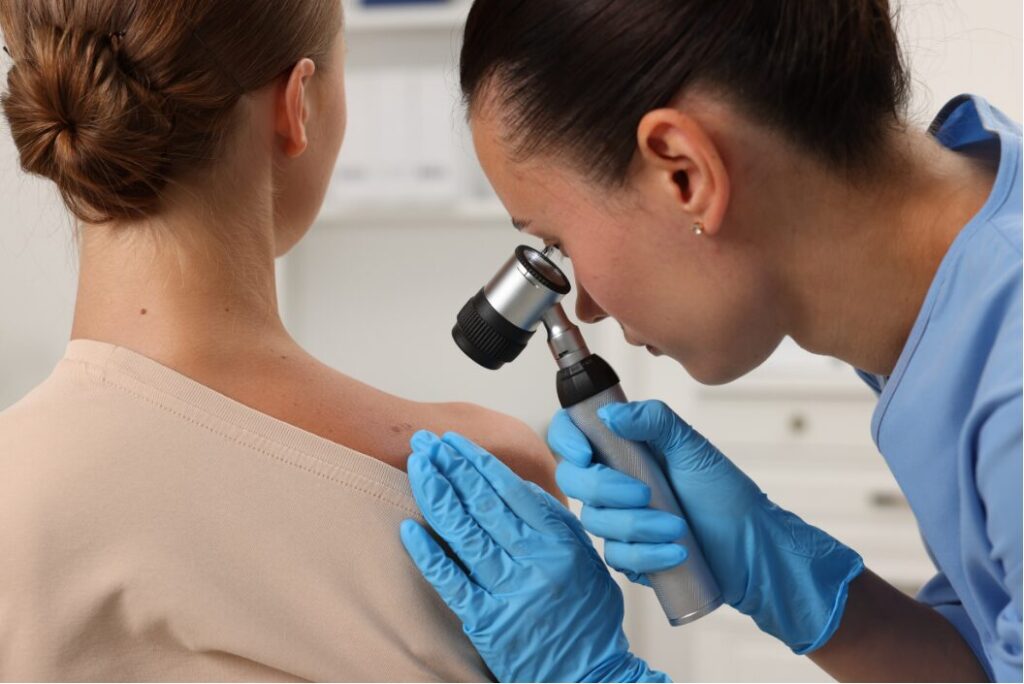
Any changing, bleeding, or non-healing skin lesion should be evaluated by a qualified medical professional.
What Is Basal Cell Carcinoma Mohs Surgery?
Basal cell carcinoma Mohs surgery is a precise technique used to remove certain skin cancers layer by layer. Unlike standard excision, which typically removes the tumor with a predetermined margin of surrounding tissue, Mohs surgery allows the surgeon to examine the edges of each layer immediately.
The process generally involves:
- Numbing the area: Local anesthesia is used to keep you comfortable.
- Removing the visible tumor: The surgeon carefully removes the cancer along with a thin layer of surrounding tissue.
- Examining the tissue: The tissue is processed and examined under a microscope.
- Removing remaining cancer: If cancer cells are found at the edges, another thin layer is removed only from the affected area.
- Closing the wound: Once the cancer has been completely removed, the wound may be allowed to heal naturally or closed with stitches or another reconstructive technique.
This careful approach helps minimize unnecessary removal of healthy tissue.
Who May Need Mohs Surgery for Basal Cell Carcinoma?
Mohs surgery is not necessary for every BCC. Your dermatologist or dermatologic surgeon will consider several factors when recommending treatment.
Location
Mohs is commonly considered for tumors on areas where tissue preservation is particularly important, such as the:
- Nose
- Eyelids and area around the eyes
- Lips
- Ears
- Face
- Fingers and other functionally important areas
Tumor Characteristics
Mohs may also be appropriate for BCCs that are:
- Large or aggressive
- Poorly defined
- Recurrent after previous treatment
- Located in a high-risk area
- More likely to extend beyond what is visible
Your individual cancer type, size, location, and medical history all play a role in choosing the best treatment.
Benefits of Mohs Surgery
One of the main advantages of Mohs surgery is its combination of high cancer-control rates and tissue preservation.
Because the surgeon examines the tissue margins during the procedure, Mohs can provide immediate confirmation that the removed tissue is free of detectable cancer cells before reconstruction is completed.
Potential benefits include:
- Precise removal of cancerous tissue
- Preservation of more healthy skin
- Smaller wounds in appropriate cases
- Careful margin assessment during treatment
- Potentially improved cosmetic and functional outcomes
While Mohs has excellent cure rates for many BCCs, no treatment can guarantee that skin cancer will never return.
What Is Recovery Like After Mohs Surgery?
Recovery depends largely on the size and location of the surgical wound and how it is repaired.
Your surgeon may recommend:
- Keeping the wound clean and protected
- Changing dressings as directed
- Avoiding strenuous activity for a period of time
- Watching for signs of infection or abnormal bleeding
- Returning for suture removal if needed
Some bruising, swelling, tenderness, or mild discomfort can occur after surgery. A scar is also expected, although its appearance often improves over time.
Follow your surgeon’s wound-care instructions carefully, and contact the medical team if you develop significant bleeding, worsening pain, spreading redness, pus, fever, or other concerning symptoms.
Protecting Your Skin After Treatment
Having one BCC increases your risk of developing additional skin cancers. Regular skin examinations and sun protection are important after treatment.
Consider these habits:
- Use a broad-spectrum sunscreen with SPF 30 or higher.
- Reapply sunscreen as directed, especially outdoors.
- Wear protective clothing and a wide-brimmed hat.
- Seek shade when UV exposure is strongest.
- Avoid indoor tanning.
- Perform regular skin checks and report new or changing lesions.
3 Key Takeaways
- Mohs surgery is a highly precise treatment for certain basal cell carcinomas, particularly those in high-risk locations or with aggressive features.
- The procedure examines tissue margins during surgery, helping the surgeon remove cancer while preserving as much healthy tissue as possible.
- Ongoing skin protection and surveillance matter because people who develop BCC have an increased risk of future skin cancers.
Ready to Discuss Your Treatment Options?
A basal cell carcinoma diagnosis does not mean you have to face treatment alone. The dermatology team at Unified Health can help evaluate your skin cancer and discuss whether Mohs surgery or another treatment approach is appropriate for you.
Schedule a consultation with Unified Health:
www.unifiedhealthusa.com/online-booking
Medical Disclaimer: This article is for informational and educational purposes only and does not replace professional medical advice, diagnosis, or treatment. Always consult a qualified healthcare professional for evaluation and personalized recommendations regarding basal cell carcinoma or any other medical condition.