A diagnosis of facial skin cancer can be stressful, especially when you are concerned about both your health and your appearance. If you are looking for SRT for facial skin cancer scarless treatment, superficial radiation therapy (SRT) may offer a non-surgical option for certain basal cell and squamous cell skin cancers.
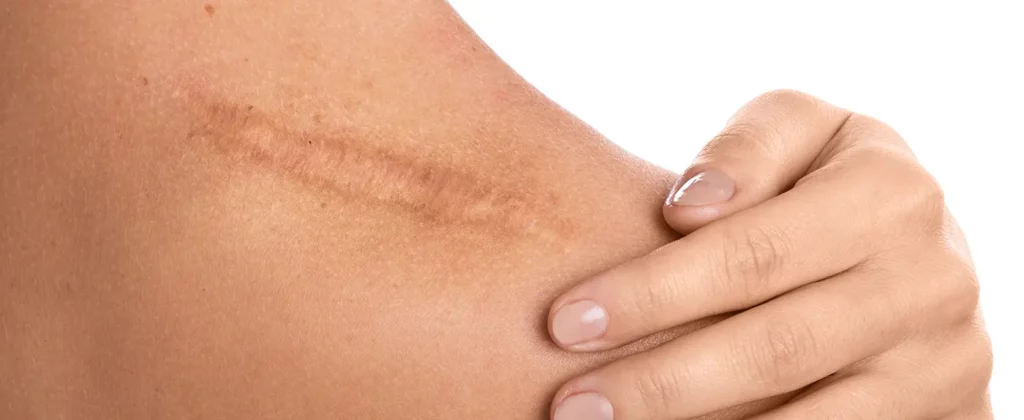
Unlike surgery, SRT does not require cutting into the skin. It uses precisely targeted radiation to treat cancer cells while avoiding a surgical incision and stitches. However, “scarless” should be understood carefully: SRT avoids a surgical scar, but temporary or permanent skin changes can still occur.
What Is SRT for Facial Skin Cancer?
Superficial radiation therapy delivers controlled doses of radiation directly to a skin cancer and the surrounding treatment area. Because the radiation is designed to work primarily near the skin’s surface, it can be useful for selected nonmelanoma skin cancers.
SRT may be considered for certain:
- Basal cell carcinomas (BCC)
- Squamous cell carcinomas (SCC)
- Squamous cell carcinoma in situ
- Early-stage, localized skin cancers in appropriate patients
Research on image-guided SRT has reported high local tumor-control rates in selected early-stage nonmelanoma skin cancers. One large study of 2,917 lesions reported 99.3% local tumor control, although individual results can vary based on cancer characteristics and treatment approach.
Importantly, SRT is not appropriate for every skin cancer. Dermatologists consider the cancer’s type, depth, size, location, and risk features before recommending treatment.
How Can SRT Help Avoid a Surgical Scar?
One of the biggest concerns with facial skin cancer surgery is the possibility of a visible scar. This can be especially important when a tumor is located on the nose, cheek, forehead, eyelid area, or another highly visible part of the face.
SRT offers a different approach.
No Surgical Incision
SRT treats the cancer without cutting away the tumor. This means there is no surgical wound that needs to close and no sutures required.
No Tissue Removal
Surgery removes cancerous tissue, while SRT uses radiation to damage the DNA of cancer cells so they cannot continue growing. This allows the skin’s structure to remain intact without surgically removing a section of tissue.
Cosmetic Considerations
Avoiding an incision may be appealing for patients who want to minimize the possibility of a traditional surgical scar. However, SRT can cause redness, irritation, dryness, pigmentation changes, or other radiation-related skin effects. Your dermatologist should explain the potential short- and long-term cosmetic effects before treatment.
SRT vs. Surgery for Facial Skin Cancer
SRT is one of several treatment options for nonmelanoma skin cancer. For many patients, surgery—particularly Mohs micrographic surgery—remains an important treatment option, especially for high-risk tumors.
The American Academy of Dermatology notes that surgical treatment generally remains the most effective treatment for cutaneous squamous cell carcinoma, while radiation may be considered for selected lower-risk tumors or when surgery is not appropriate.
Recent research comparing SRT and Mohs surgery also found lower pooled local recurrence rates with Mohs in the studies analyzed. Because these treatments have different advantages, limitations, and patient-selection criteria, the choice should be individualized rather than based solely on the desire to avoid a scar.
What Happens During SRT Treatment?
Before treatment begins, your dermatologist evaluates the skin cancer and determines whether SRT is appropriate. A biopsy is typically used to establish the diagnosis.
When image-guided SRT is used, imaging such as high-resolution dermal ultrasound may help evaluate the tumor and guide treatment planning. Studies have reported excellent tumor-control rates for selected early-stage cancers treated with image-guided SRT.
Treatment is generally delivered in multiple sessions rather than all at once. The exact number of treatments depends on the tumor and the treatment plan.
During treatment, you do not need an incision or stitches. Some patients experience skin redness, tenderness, dryness, or irritation as treatment progresses. These effects are usually discussed and monitored by the treating medical team.
Is SRT Right for Your Facial Skin Cancer?
The best treatment depends on your individual diagnosis. Factors your dermatologist may consider include:
- Type of skin cancer
- Tumor size and depth
- Location on the face
- Whether the cancer is primary or recurrent
- Tumor risk characteristics
- Your overall health and treatment preferences
- Previous treatments in the same area
SRT may be particularly appealing to patients who want a non-surgical approach, but avoiding surgery should never come at the expense of appropriate cancer treatment.
3 Key Takeaways
- SRT can treat selected facial skin cancers without a surgical incision or stitches, which may help avoid a traditional surgical scar.
- “Scarless” does not mean completely free of skin changes. Radiation can cause temporary or lasting effects such as redness, pigmentation changes, or irritation.
- Treatment must be individualized. Your dermatologist should evaluate the cancer’s type, size, depth, location, and risk factors before recommending SRT, Mohs surgery, or another treatment.
If you have been diagnosed with facial skin cancer and want to learn whether a non-surgical treatment may be appropriate for you, schedule a consultation with Unified Health to discuss your diagnosis and treatment options.
Medical Disclaimer: This article is for informational purposes only and does not replace professional medical advice, diagnosis, or treatment. Treatment decisions should be made with a qualified healthcare professional based on your individual medical condition.